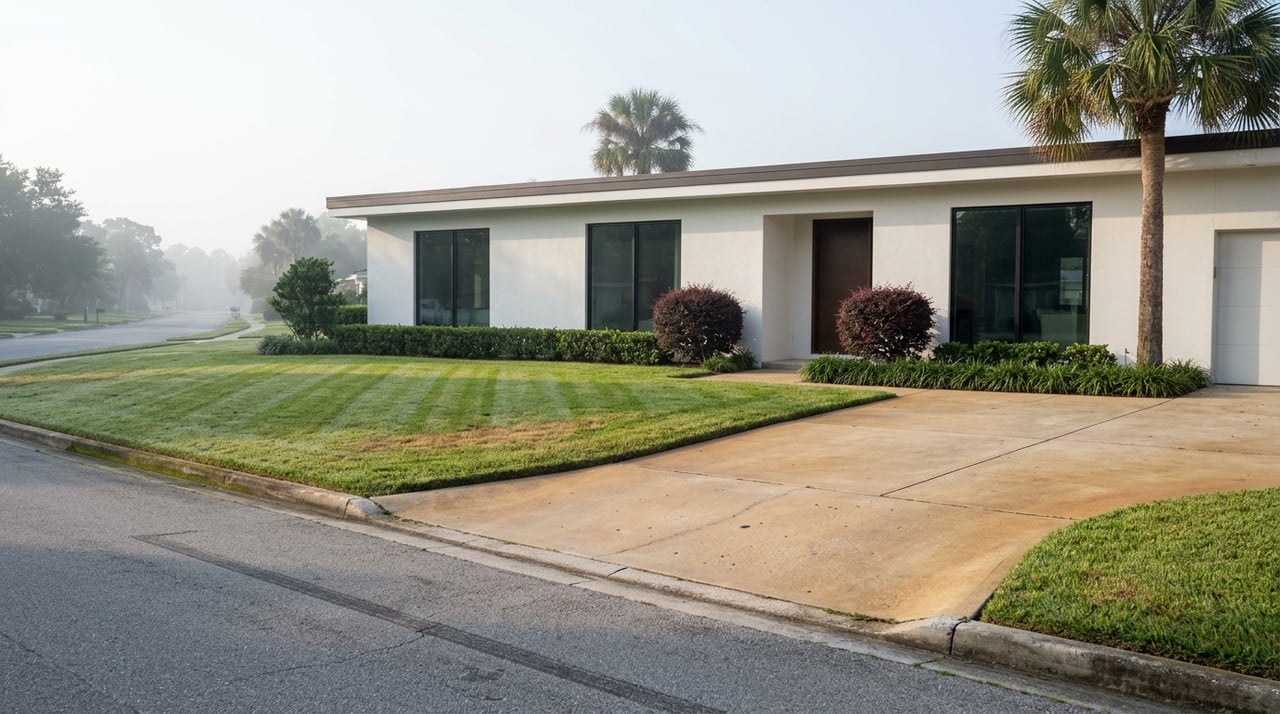
Hempel Avenue is two lanes of asphalt with oak canopy overhead and not much else in the way of infrastructure. There is no strip of storefronts built for foot traffic, no downtown business association sending out press releases, no city-run visitor center handing out maps. If you drove through on a random Tuesday, you might not clock that you'd passed through anything at all.
And yet ask a Gotha resident what's happening this fall and they'll answer without checking an app. There's a race on the calendar in November. There's a garden that opens its gates most weeks. There's a sandwich shop that's been serving the same road for nearly three decades. None of it is run by a city government, because Gotha doesn't have one to run it. It's an unincorporated community in Orange County, which means the fall calendar here isn't a municipal product. It's built and maintained by a handful of resident-led organizations that have quietly kept this town's identity alive since long before Orlando's suburbs grew out to meet it.
That's the thing worth understanding about Gotha before you plan a weekend around it: the events aren't scattered coincidences. They're the output of two nonprofits and one family business, all doing the work a chamber of commerce would do somewhere else.
A 5K that a neighborhood association built from scratch
On November 14, 2026, the Gotha Rural Settlement Association is putting on the annual Gotha 5K, starting and finishing at Gotha Middle School on Gotha Road. Check-in opens at 6:30 a.m., the race starts at 7:30, and every finisher walks away with a medal and a t-shirt, with additional awards for the top three men and women. The race wraps into a "Gotha Family and Friends" gathering back at the school, with food, local vendors, and activities for kids.
What makes this worth noting isn't the distance or the start time. It's who's running it. The Gotha Rural Settlement Association is a community group, not a parks department or a city recreation office. In a lot of Central Florida towns, a race like this gets absorbed into a municipal special events calendar with a logo and a budget line. In Gotha, it stays a neighborhood project, organized by the people who live along the same roads the race runs down. If you want to register or check details as the date gets closer, the Gotha 5K page has the specifics.
The garden that runs on volunteer hours, not a payroll
A short drive down Hempel Avenue sits Nehrling Gardens, the former home and test plots of horticulturist Henry Nehrling, whose property had become a popular stop for nature enthusiasts and new Florida settlers by the early 1900s. The property is listed on the National Register of Historic Places, and it earned that status honestly. Nehrling used the grounds to test more than 3,000 new and rare plants for what's now the USDA, and over 300 of them became staples of Florida ornamental horticulture, including caladiums, palms, bamboos, magnolias, amaryllis, and crinum lilies. That's not local color. That's the plant list a lot of Central Florida yards are still built from, developed on a few acres in Gotha.
The gardens are open to the public Tuesdays and Wednesdays from 10 a.m. to 2 p.m., with Open Garden Days on the first and second Saturday of every month from 9 a.m. to 3 p.m., typically for a suggested five-dollar donation. None of that schedule is staffed by paid city employees. The Henry Nehrling Society is an all-volunteer nonprofit, which is the same reason the gardens nearly disappeared after Nehrling's death in 1929 and the same reason they're still standing today. Volunteers who show up on a Wednesday morning to weed a path are the actual infrastructure keeping a National Register site open to the public.
The clearest expression of that volunteer effort is the Holiday Amaryllis Festival, a free event the gardens have held every December for over a decade, most recently marking its 14th year in December 2025. It's grown from a handful of vendors selling amaryllis bulbs into a full day of food, live music, a holiday market, and a visit from birds of prey handlers, but it's still run by the same small nonprofit board and a rotating cast of neighbors who've been showing up since the early years. Watch the Nehrling Gardens events page for the 2026 date once it's set.
A grocery store that never stopped being the town's living room
Back on Hempel Avenue, inside the 1910 Brockman House, is Yellow Dog Eats. The building started as a residence before it became Hamm's Grocery, the general store that served Gotha's small population for decades. When chef Fish Morgan, a Culinary Institute of America graduate, moved his sandwich and barbecue concept from its original Winter Park spot into the building in the late 1990s, he kept the bones of the old store and let the rest accumulate the way small businesses do when the same family runs them for a long time.
This year matters for the restaurant in a specific way. Morgan opened the first Yellow Dog Eats in 1996, which puts 2026 right around the thirty-year mark for the concept, even as the Gotha location itself has been the flagship since 1998 or 1999. That's not a milestone the restaurant is treating quietly. Whatever your read on barbecue trends, a family-run kitchen operating out of a converted general store for three decades is a genuinely uncommon thing to have in a town this small, and it's a big part of why Gotha shows up on food writers' radar at all despite having no restaurant row of its own.
Where the trail actually fits into this
The West Orange Trail runs about 22 miles from Killarney Station near Oakland north to Apopka, and Gotha sits close enough to the corridor that reaching it is a short drive rather than a destination trip. The trail belongs to Orange County Parks and Recreation, not to Gotha, and its marquee amenities like bike rentals and the Plant Street stretch through downtown Winter Garden are a few miles away. The closest major access point for Gotha residents is Chapin Station, which regular riders single out as the shadiest stop on the route with the most parking and a well-kept memorial garden for resting midway through a ride.
The distinction matters because it's easy to credit Gotha with an amenity that technically belongs to the county and runs through several towns. What Gotha actually gets is proximity. It's a short drive to a paved, tree-covered trail that connects to a much larger network, without Gotha having had to build or maintain a foot of it. That's a different kind of civic arrangement than the 5K or the gardens, where residents built the thing themselves. Here, the town borrows infrastructure from its neighbors and uses it well.
What actually holds this together
Line up the fall calendar and a pattern shows up. The race is run by a resident association. The garden is run by an all-volunteer historical nonprofit. The restaurant is run by one family in a building that's changed purpose twice in over a century but never left neighbors' hands. None of it required a downtown business district or a city marketing budget. It required people who decided the things worth doing in Gotha were worth doing themselves, and kept doing them long enough that visitors now show up expecting a calendar that was never officially built.
That's a different kind of stability than most Central Florida communities can claim, and it's worth knowing if you're the kind of person who pays attention to what makes a place feel like itself years after you've moved in.
If you're curious what that kind of staying power does for home values in a small, unincorporated community like Gotha, or you just want a clear read on the current market here, Keystone Global Real Estate puts together a free market report for Gotha and the surrounding West Orange County area. Get a FREE Market Report and see what the data says about your corner of Hempel Avenue.